
Any Questions? Email Us
Talk to an Expert

Climbing Ama Dablam- Technical and Challenging Expedition in Nepal
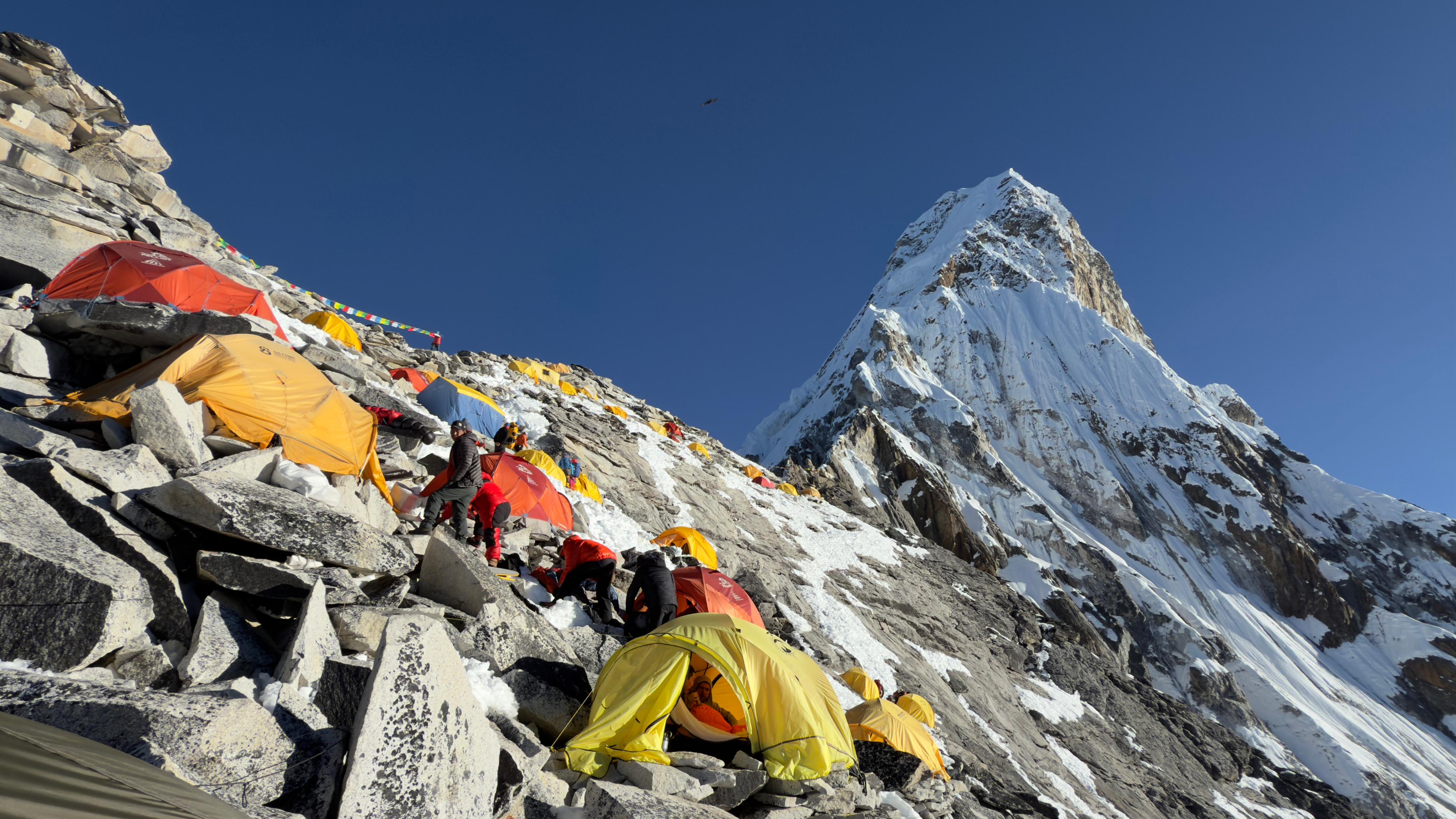
Ama Dablam is widely regarded as one of the most elegant yet technically demanding peaks in the Himalayas. Rising to 6,812 meters, its dramatic ridges and exposed climbing routes make it a true test of skill, endurance, and mental strength. Unlike standard trekking peaks, Ama Dablam demands solid alpine experience, rope work proficiency, and the ability to navigate steep ice, rock, and mixed terrain in high-altitude conditions.
The name "Ama Dablam" translates to "Mother's Necklace" in the Sherpa language. The mountain's long ridges resemble a mother's outstretched arms, while the hanging glacier represents the traditional jewelry worn by Sherpa women. This cultural significance, combined with its breathtaking beauty, makes Ama Dablam one of Nepal's most photographed and admired mountains.
An Ama Dablam Expedition typically begins with a scenic flight to Tenzing-Hillary Airport followed by a trek through legendary Sherpa villages such as Namche Bazaar, Tengboche, and Pangboche. These acclimatization days allow climbers to adapt to the high altitude while experiencing the rich culture, ancient monasteries, and spectacular Himalayan scenery of the Khumbu Valley.
Unlike many trekking peaks, Ama Dablam is considered a technical climbing mountain requiring prior mountaineering experience. Climbers navigate steep rock faces, exposed ridges, mixed terrain, and challenging sections that demand the use of fixed ropes, crampons, ice axes, and advanced climbing techniques. The standard Southwest Ridge route offers a rewarding yet demanding ascent, making the expedition a favorite among serious mountaineers looking to enhance their Himalayan climbing portfolio.
The best seasons for an Ama Dablam Expedition are spring (April–May) and autumn (October–November) when weather conditions are generally stable, visibility is excellent, and climbing success rates are highest. During these periods, climbers enjoy panoramic views of some of the world's highest peaks, including Mount Everest, Lhotse, Makalu, and Cho Oyu.
For mountaineers seeking a challenging yet achievable Himalayan objective, the Ama Dablam Expedition offers the perfect combination of technical climbing, breathtaking landscapes, cultural immersion, and personal achievement. Standing atop this magnificent peak provides an unforgettable sense of accomplishment and a unique perspective of the Everest region. Whether you are building experience for higher Himalayan expeditions or pursuing one of the world's most iconic climbs, Ama Dablam remains a dream destination for climbers seeking adventure, challenge, and extraordinary mountain memories.
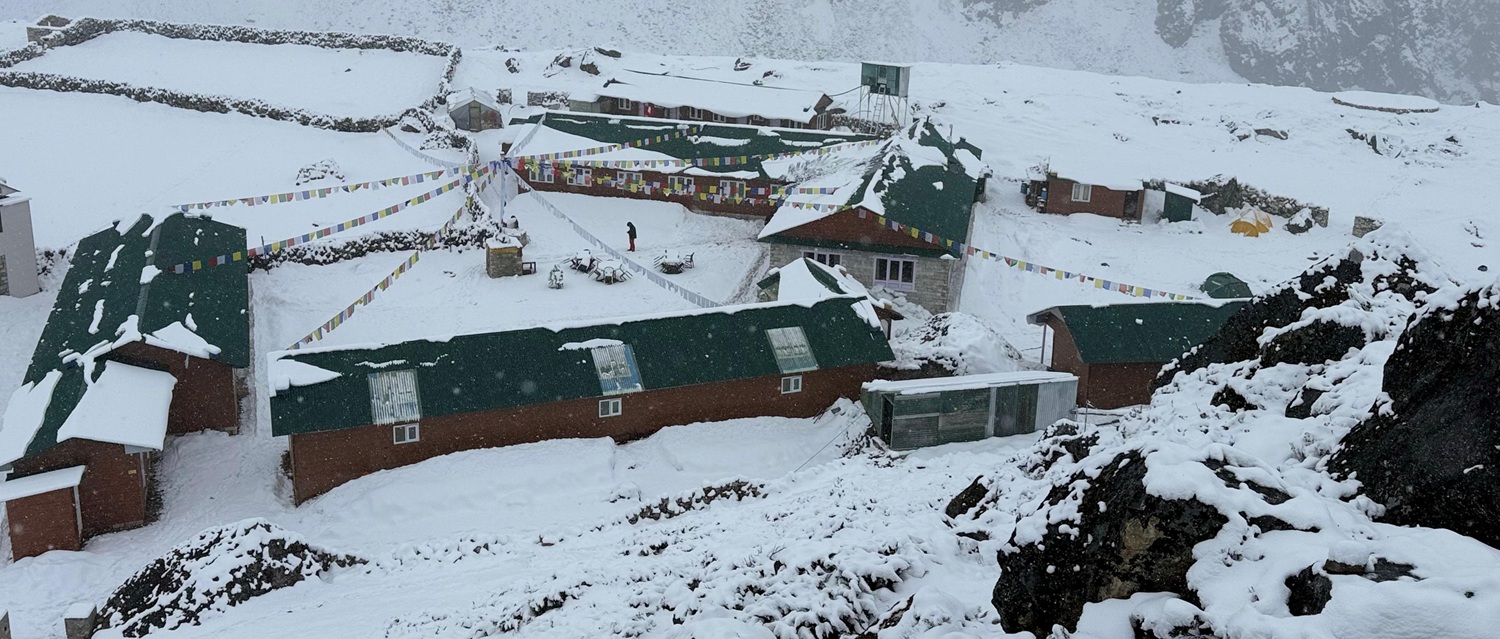
Yes, the Ama Dablam Expedition is widely regarded as one of the most technical and challenging climbing expeditions in Nepal. Unlike trekking peaks such as Island Peak or Mera Peak, Ama Dablam demands advanced mountaineering skills, excellent physical fitness, and previous experience on high-altitude mountains.
Standing at 6,812 meters (22,349 feet) in the Khumbu region, Ama Dablam is famous for its stunning beauty, exposed ridges, steep rock faces, mixed climbing terrain, and technical sections that require climbers to use ropes and specialized climbing equipment.
1. Steep Rock Climbing Sections
The standard Southwest Ridge route involves several steep rock-climbing sections. Climbers must ascend exposed granite ridges where balance, confidence, and proper rope techniques are essential. Some sections require scrambling and climbing on near-vertical rock faces while carrying expedition gear.
2. Mixed Terrain Climbing
Ama Dablam combines rock, snow, and ice climbing throughout the route. Climbers need experience using:
The ability to transition between different types of terrain is critical for a successful summit attempt.
3. Exposure and Narrow Ridges
One of the mountain's defining characteristics is its highly exposed ridgelines. Climbers often traverse narrow ridges with significant drops on either side. While fixed ropes provide security, the exposure can be mentally demanding even for experienced mountaineers.
4. High-Altitude Challenges
Although lower than many 8,000-meter peaks, Ama Dablam's altitude remains a serious challenge. Climbers face:
Physical and Mental Requirements
Ama Dablam is not suitable for beginners. Climbers should possess:
Many climbers use Ama Dablam as preparation for future expeditions on Mount Everest or other major Himalayan peaks because it develops both technical and high-altitude climbing skills.
Ama Dablam is unquestionably one of Nepal's most technical and challenging climbing expeditions. Its combination of exposed ridges, steep rock faces, mixed snow and ice terrain, and high-altitude conditions makes it a true mountaineering challenge. For climbers with the necessary skills and experience, the Ama Dablam Expedition offers an unforgettable adventure and the opportunity to summit one of the most beautiful mountains in the Himalayas. Its technical nature, breathtaking scenery, and prestigious reputation make Ama Dablam a bucket-list expedition for mountaineers worldwide.
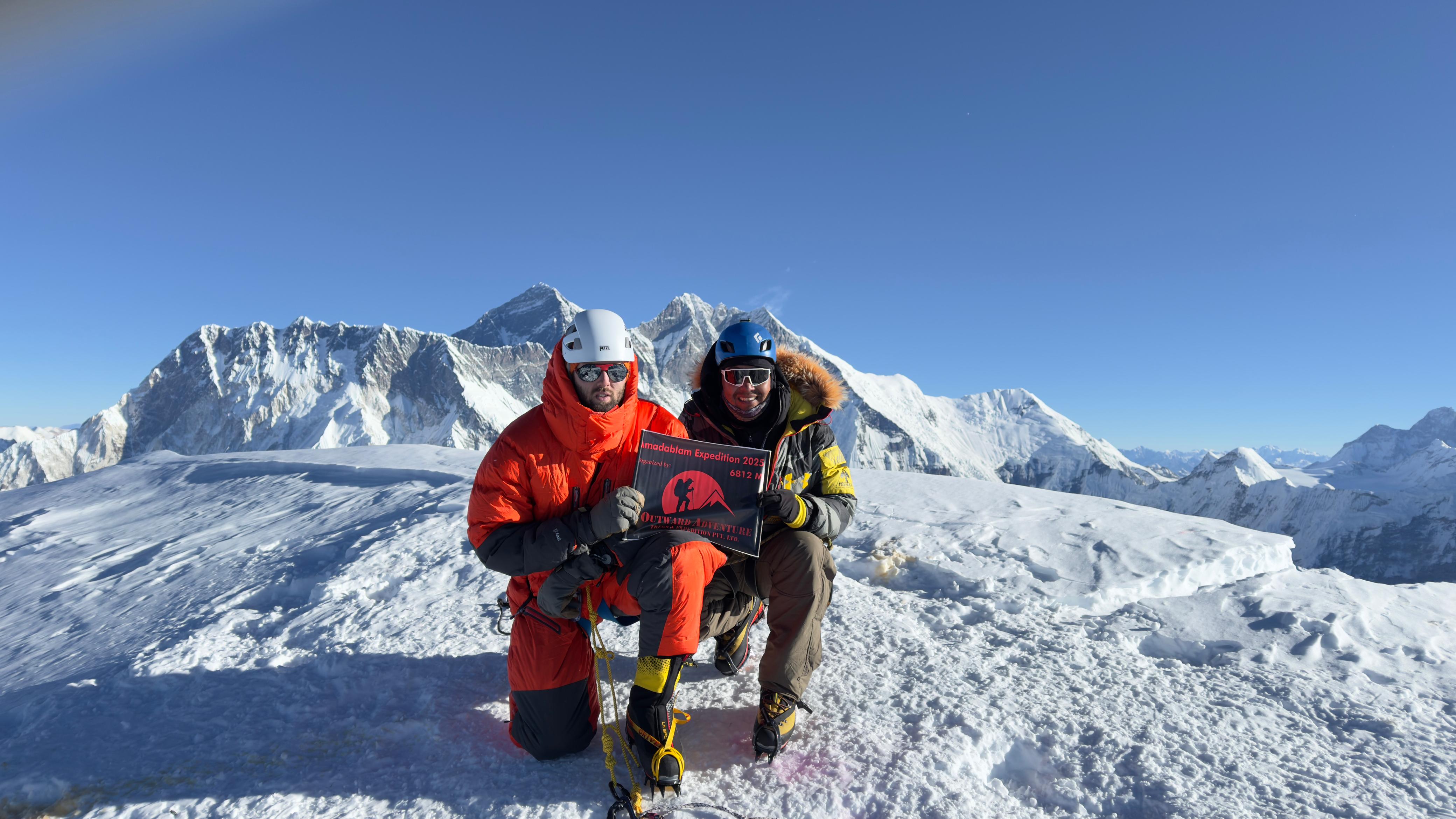
Although Ama Dablam has a relatively high success rate compared to many Nepal Himalayan expeditions, not every climber reaches the summit. Success on Ama Dablam depends on a combination of physical fitness, technical skills, acclimatization, weather conditions, and mental resilience. Even experienced mountaineers may be forced to turn back before reaching the summit.
1. Inadequate Acclimatization
One of the leading reasons climbers fail to summit Ama Dablam is poor acclimatization. At 6,812 meters (22,349 feet), oxygen levels are significantly lower than at sea level. Climbers who ascend too quickly may experience:
Proper acclimatization rotations between camps are essential for a safe and successful climb.
2. Lack of Technical Climbing Experience
Ama Dablam is not a trekking peak. The mountain requires climbers to navigate:
Many climbers underestimate the technical nature of the mountain. Those without prior mountaineering experience often struggle on challenging sections such as the Yellow Tower and Mushroom Ridge.
3. Poor Physical Fitness
The expedition requires weeks of trekking, climbing, and carrying gear at high altitude. Climbers lacking endurance, strength, and cardiovascular conditioning may become exhausted before summit day.
Physical challenges include:
Even technically skilled climbers can fail if they are not physically prepared.
4. Unpredictable Himalayan Weather
Weather is one of the most uncontrollable factors on Ama Dablam. Conditions can change rapidly and force climbers to abandon their summit attempt.
Common weather-related challenges include:
Strong winds near the summit ridge can make climbing dangerous and significantly reduce success rates.
5. Mental Fatigue and Fear of Exposure
Ama Dablam is famous for its narrow ridges and exposed climbing sections. Climbers often face steep drops on both sides of the route.
Mental challenges include:
Many climbers turn back because they lose confidence or become overwhelmed by the mountain's exposure.
6. Illness and Health Issues
Even minor illnesses can become serious at high altitude. Common problems include:
These conditions weaken climbers and reduce their ability to perform safely.
7. Equipment Problems
Technical climbing requires reliable equipment. Summit attempts can fail due to:
Climbers must be comfortable using all technical gear before joining the expedition.
8. Poor Decision-Making
Successful climbers know when to continue and when to turn around. Poor decisions can lead to exhaustion, altitude problems, or dangerous situations.
Examples include:
Experienced guides often make difficult turnaround decisions to ensure climber safety.
9. Short Weather Windows
Ama Dablam summit opportunities often depend on narrow periods of stable weather. Delays caused by storms, route congestion, or poor conditions may leave climbers without a suitable summit window before their expedition ends.
10. Underestimating the Mountain
Perhaps the biggest reason for failure is underestimating Ama Dablam itself. Its stunning appearance often hides the reality that it is one of Nepal's most technical and demanding expeditions.
Many climbers assume that because it is lower than Mount Everest, it is easier. In reality, Ama Dablam requires stronger technical climbing skills than the standard Everest route and demands a high level of preparation.
Climbers fail to summit Ama Dablam for many reasons, including inadequate acclimatization, lack of technical experience, poor fitness, severe weather, illness, equipment issues, and mental challenges. However, with proper training, previous mountaineering experience, expert guidance, and a carefully planned acclimatization schedule, climbers can significantly increase their chances of standing atop one of the most beautiful and iconic peaks in the Himalayas. Ama Dablam rewards preparation, patience, and perseverance, making a successful summit one of the most respected achievements in Himalayan mountaineering.
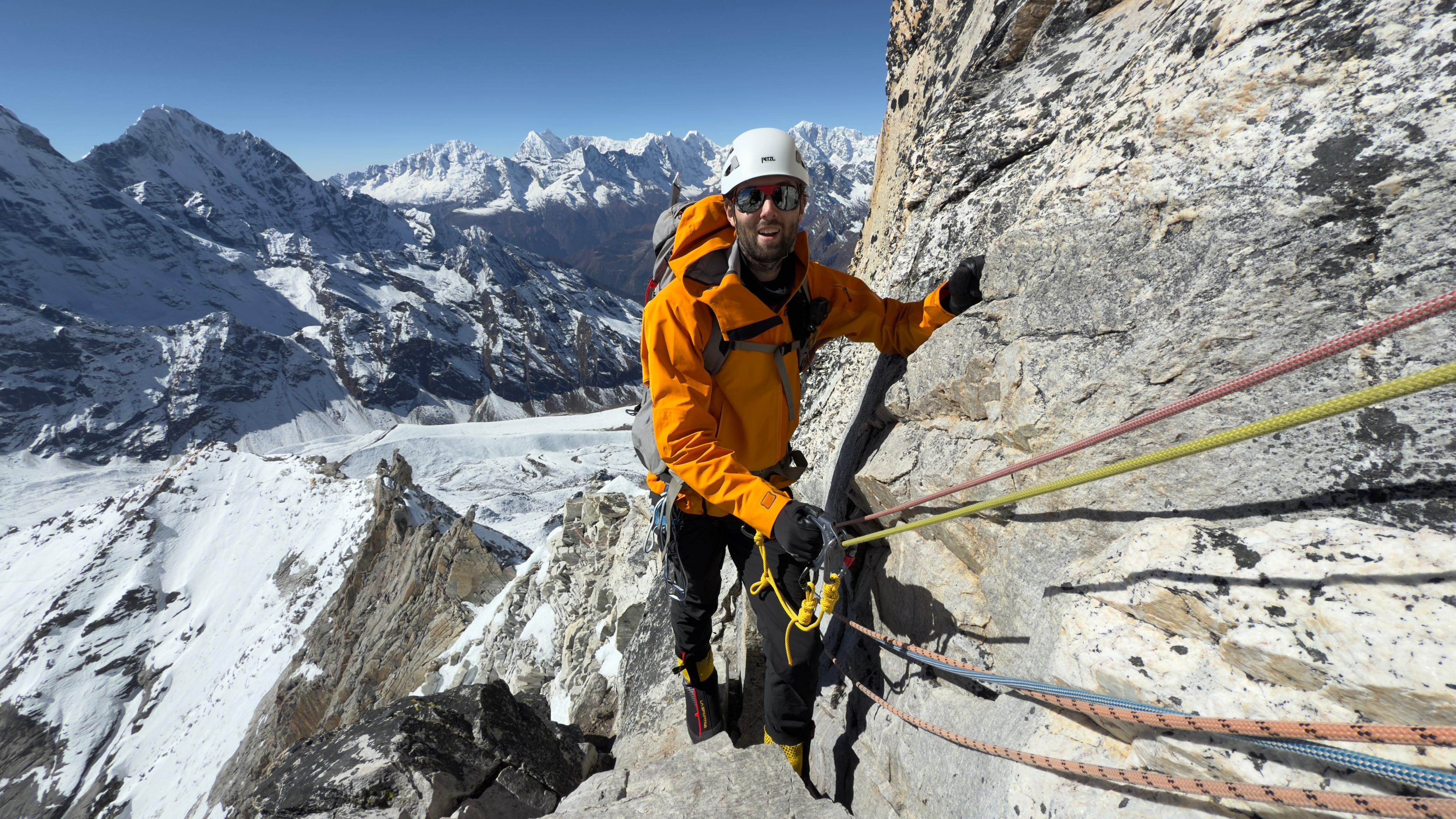
Choosing the right expedition operator is one of the most important decisions for a safe and successful climb on Ama Dablam. The mountain is highly technical, exposed, and physically demanding, which means your success depends not only on your skills but also on the quality of your guiding company, logistics, and safety management.
Outward Adventure Treks is one of the emerging Himalayan expedition operators known for delivering well-organized, safety-focused, and success-driven mountaineering experiences in Nepal.
1. Experienced Himalayan Climbing Support
A successful Ama Dablam expedition requires expert leadership. Outward Adventure Treks provides:
This is especially important on technical sections like the Yellow Tower and Mushroom Ridge, where expert guidance significantly improves safety and summit chances.
2. Strong Focus on Safety and Risk Management
Safety is the foundation of any successful high-altitude expedition. Ama Dablam involves exposure, altitude risk, and rapidly changing weather.
Outward Adventure Treks emphasizes:
This structured approach helps reduce failure due to altitude sickness or unsafe summit attempts.
3. Well-Planned Acclimatization Strategy
One of the main reasons climbers fail on Ama Dablam is poor acclimatization. A well-designed rotation plan is essential.
The company ensures:
This increases both safety and overall summit success rate.
4. High-Quality Logistics and Expedition Management
A successful climb requires more than just climbing skills. Logistics play a major role in performance.
Outward Adventure Treks provides:
5. Small Group Size and Personalized Attention
Unlike large commercial groups, smaller expedition teams allow:
This is especially important on a technical peak like Ama Dablam, where individual support matters during exposed climbs.
6. Proven Experience in the Everest Region
Operating within the world-famous Sagarmatha National Park, the team is familiar with:
This regional expertise increases the efficiency and safety of the entire expedition.
7. Strong Success-Oriented Climbing Strategy
The goal of a professional expedition operator is not just to reach base camp, but to maximize summit success safely.
Outward Adventure Treks focuses on:
This strategic approach improves the probability of reaching the summit of Ama Dablam safely.
Choosing Outward Adventure Treks for your Ama Dablam expedition means choosing safety, experience, and structured Himalayan expertise. With strong Sherpa support, careful acclimatization planning, professional logistics, and a safety-first approach, climbers gain a significantly higher chance of success on one of Nepal’s most technical and iconic mountains.
For anyone aiming to summit Ama Dablam, the right expedition partner is not just an advantage—it is a necessity.
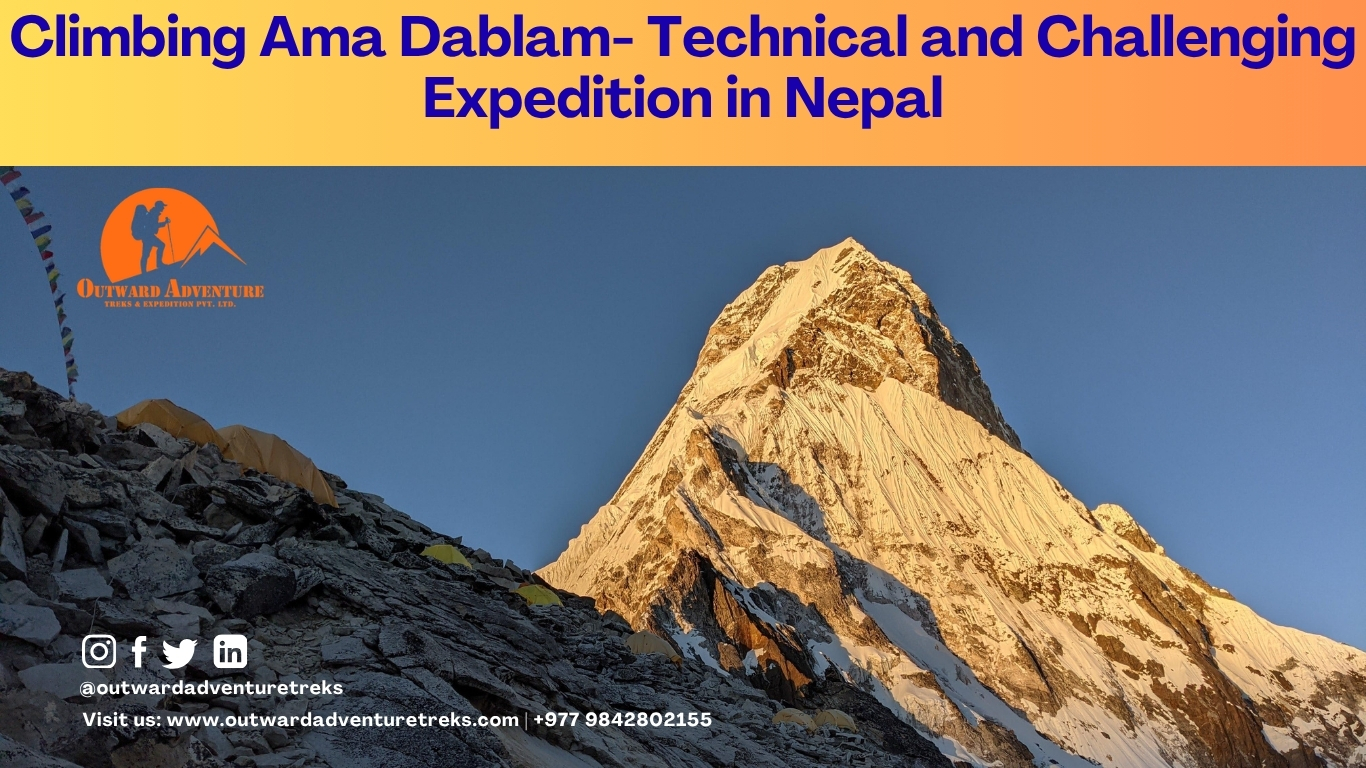
The Ama Dablam Expedition stands apart from many other Himalayan adventures because it combines high technical difficulty, extreme exposure, cultural richness, and iconic beauty in a single climb. Unlike typical trekking peaks or even some 8,000-meter expeditions, Ama Dablam is widely respected as one of the most elegant yet challenging mountains in Nepal.
1. A Highly Technical Alpine-Style Climb
What makes Ama Dablam truly different is its technical alpine nature. While peaks like Island Peak or Mera Peak are often considered trekking peaks, Ama Dablam requires advanced climbing skills.
Climbers must navigate:
This makes it closer to a technical alpine expedition than a standard trekking climb.
2. Iconic and Unique Mountain Shape
Ama Dablam is one of the most recognizable peaks in the world due to its dramatic pyramid shape. The hanging glacier on the southwest face resembles a “Dablam” (traditional Sherpa pendant), giving the mountain its poetic name, “Mother’s Necklace.”
Unlike many bulkier Himalayan peaks, Ama Dablam is visually elegant and sharply defined, making it a favorite for photographers and climbers alike.
3. Extreme Exposure on the Route
One of the most defining features of Ama Dablam is constant exposure.
Climbers often face:
Even when fixed ropes are installed, the psychological challenge is significant, making it different from many other Himalayan climbs.
4. Technical Sections Like No Other
Ama Dablam includes some of the most famous climbing features in Nepal:
These sections demand both physical skill and mental control.
5. Lower Altitude but Higher Technical Difficulty
At 6,812 meters, Ama Dablam is lower than 8,000-meter giants like Mount Everest, yet it is often considered more technically demanding than the standard Everest route.
This creates a unique contrast:
Lower altitude → less oxygen challenge than Everest
Higher technical difficulty → more climbing skill required
6. Rapid Weather Changes and Exposure
Ama Dablam is located in the Everest region, where weather can shift quickly. However, its exposed ridges make conditions feel even more extreme.
Climbers face:
7. Prestige and Climbing Reputation
Successfully summiting Ama Dablam is considered a major achievement in the mountaineering world. Many climbers use it as a preparation peak for higher Himalayan objectives or 8,000-meter expeditions.
It is often described as:
8. Cultural and Scenic Experience
The approach to Ama Dablam passes through the heart of the Khumbu region, including villages like Namche Bazaar and Tengboche.
Climbers experience:
Ama Dablam is different from other Himalayan climbs because it is not defined by altitude alone, but by technical difficulty, exposure, iconic beauty, and climbing prestige. While other peaks may be higher or easier, few match the combination of challenge and elegance that Ama Dablam offers.
For serious mountaineers, it represents a perfect balance of skill, adventure, and achievement—making it one of the most respected expeditions in Nepal and the entire Himalayas.
1. Where is Ama Dablam located?
Ama Dablam is located in the Khumbu region of eastern Nepal, inside the Everest trekking area, within Sagarmatha National Park.
2. How high is Ama Dablam?
Ama Dablam stands at 6,812 meters (22,349 ft) above sea level.
3. Is Ama Dablam a trekking peak or expedition peak?
Ama Dablam is an expedition-grade technical peak, not a trekking peak. Unlike Island Peak or Mera Peak, it requires advanced climbing skills.
4. How difficult is the Ama Dablam climb?
Ama Dablam is considered highly technical and challenging, involving:
5. What is the success rate of Ama Dablam?
The average success rate is around 60%–75%, depending on weather, experience level, and expedition support.
The best time to climb the Ama Dablam Expedition in Nepal is during the two main Himalayan climbing seasons: spring (April–May) and autumn (October–November). These periods offer the most stable weather, safer climbing conditions, and higher summit success rates on Ama Dablam.
Spring Season (April – May) – Most Popular Time
Spring is considered the best overall season for Ama Dablam.
Key Advantages:
Conditions:
Climbing routes are generally in good condition, and fixed ropes are well established by experienced teams in the Everest region, including within Sagarmatha National Park.
Spring Season (April – May) is Most Popular Time for First-time technical expedition climbers with strong preparation.
Autumn Season (October – November) – Second Best Time
Autumn is another excellent window for climbing Ama Dablam.
Key Advantages:
Conditions:
The mountain is usually in excellent shape after the monsoon season, with stable ice and rock sections.
Autumn Season (October – November) Best for: Experienced climbers who prefer colder but very stable conditions.
Winter Season (December – February) – Not Recommended
Only elite alpinists attempt winter climbs.
Monsoon Season (June – September) – Not Suitable
Why Timing Matters on Ama Dablam Expedition?
Choosing the right season is critical because Ama Dablam is a highly technical and exposed peak. Weather directly impacts:
The best time to climb Ama Dablam is spring (April–May) and autumn (October–November), when the Himalayas offer stable weather, safer climbing conditions, and the highest chance of a successful summit. These seasons are ideal for technical mountaineering in Nepal’s Everest region and are preferred by most professional expedition teams worldwide.
7. Do I need prior experience to climb Ama Dablam?
Yes. Climbers should have:
8. What are the main challenges of Ama Dablam?
Key challenges include:
9. How long does the Ama Dablam expedition take?
The expedition typically takes 4 to 6 weeks, including trekking, acclimatization, rotation, and summit attempts.
10. Is Ama Dablam harder than Everest?
Technically, yes. While Mount Everest is higher and requires extreme altitude endurance, Ama Dablam is more technical and exposed on the climbing route.
11. What type of gear is required?
Essential gear includes:
12. Can beginners climb Ama Dablam?
No. It is not suitable for beginners. Climbers must have strong mountaineering experience before attempting Ama Dablam.
13. Why is Ama Dablam famous?
Ama Dablam is famous for:
14. Do climbers need oxygen on Ama Dablam?
Most climbers do not use supplemental oxygen, but it may be carried for emergency situations depending on expedition policy.
15. Is Ama Dablam dangerous?
Yes, it carries risks due to:
However, with proper preparation and guides, it is a manageable expedition for experienced climbers.

The Ama Dablam Expedition in Nepal is widely recognized as one of the most technical, challenging, and prestigious Himalayan climbs in the Everest region. Located within Sagarmatha National Park, Ama Dablam stands out for its steep rock faces, exposed ridges, and demanding mixed climbing terrain that requires advanced mountaineering skills and strong high-altitude experience.
Unlike trekking peaks such as Island Peak or Mera Peak, Ama Dablam is not suitable for beginners. It demands excellent physical fitness, rope-handling ability, and confidence on vertical and exposed sections like the Yellow Tower and Mushroom Ridge. The combination of technical difficulty and high-altitude conditions makes it a true alpine-style expedition in the Himalayas.
Despite its challenges, Ama Dablam is also one of the most rewarding climbs in the world. Successful climbers are rewarded with breathtaking panoramic views of Everest, Lhotse, Makalu, and Cho Oyu, along with a deep sense of personal achievement. With proper acclimatization, experienced Sherpa support, and careful expedition planning, climbers can significantly increase their chances of a safe and successful summit.
In conclusion, the Ama Dablam Expedition is not just a mountaineering journey—it is a test of skill, endurance, and determination. Its technical nature and extreme beauty make it one of Nepal’s most respected and unforgettable climbing experiences for serious mountaineers.
 Jul 14, 2026
Planning a Himalayan adventure in 2027? Everest Base Camp vs Annapurna Base Camp Trek is one of the most searched compar...
Read More Jul 09, 2026
Planning your 2027 Island Peak and Everest Base Camp Trek is your opportunity to experience two of Nepal's most iconic H...
Read More Jul 05, 2026
Nepal is globally recognized as the heart of Himalayan mountaineering, offering the world's most iconic high-altitude ex...
Read More Jun 28, 2026
Combined Lobuche and Island Peak Climbing is one of Nepal's most rewarding and challenging alpine adventures, offering e...
Read More
Leave a Comment