Any Questions? Email Us
Talk to an Expert
Annapurna Circuit Trek is trekking through the region inside the Annapurna Conservation Area. It is a trek via the incredible Annapurna region and be awed by the Nepalese Himalayas. These snow-capped peaks, mist-shrouded valleys, out-of-the-way communities, and remote monasteries will inspire those with a bold spirit and a yearning for a definitive nature experience.
Reach altitudes of 5416 meters / 17,756 ft, discover the inherited traditions of the local people, and submerge yourself completely in the spectacular mountain wilderness of the Annapurna Circuit. This is a challenging trip, but the sense of triumph will leave even the most seasoned trekker with some unforgettable memories. This famous hike is astonishing for its ethnic villages, natural beauty, and easy access from Kathmandu or Pokhara.
Notwithstanding the new roads going up the Marsyangdi and Kali Gandaki valleys, the Annapurna Circuit trek is still very much worth it. Although many things have changed with the new road, a lot also remains the same. People are just as friendly, the villages just as authentic and the mountain views just as spectacular.
The Annapurna Circuit trek requires around two weeks of time, but most of the hike is easygoing. Gradual climbs and well-marked trails with frequent restaurants and lodges to take a break. What makes it challenging is the tough day you climb the Thorung La Pass and the altitude after Manang.
Trekkers will be able to get the panoramic sceneries of the Himalayas, including Mt. Dhaulagiri (8,167m), Mt. Annapurna I (8,091m), Mt. Manaslu (8,163 m), Mt. Annapurna II (7,937 m.), Mt. Annapurna III (7,555m), Mt. Annapurna IV (7,525m), Mt. Annapurna south (7,219m), Mt. Nilgiri (7,041m), Mt. Machhapuchhare (6,998m), Mt. Hiunchuli (6,441m), Mt. Lamjung Himal (6,986m), Tukuche peak (6,920m), Tilicho peak (7134m) and several other peaks throughout the trek.
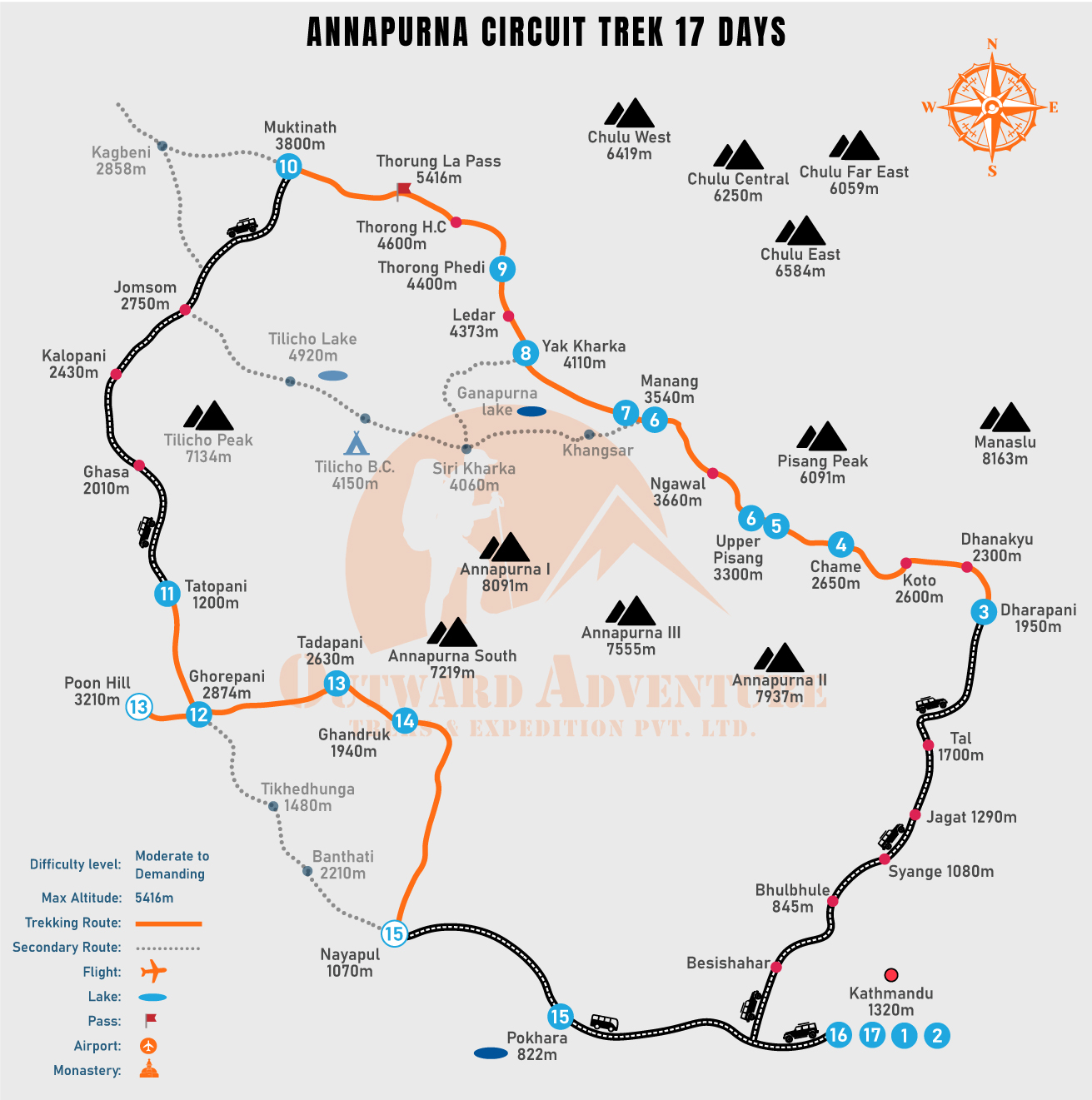
We will begin our trek with a scenic drive from Kathmandu to Dharapani and the route follows the Marsyandghi River Valley taking you through Chame, Pisang, Manang, Yak Kharaka, and Thorong Phedi. These places are the overnight spending places.
On our first day trek, we reach Chame, the district headquarter of Manang district. We make our entry here and set another journey for Upper Pisang. On the way to Pisang, we will have close-up views of the Annapurna mountains from our lunch spot Ngawal. The next day’s short trek will take us to Manang.
In Manang, we spend one more day for acclimatization purposes and to prepare for the crossing of Thorung La pass. After acclimatizing at Manang, we continue the trail and head to Yak Kharka, and on the next day, we hike up to Thorong Phedi and spend the night there.
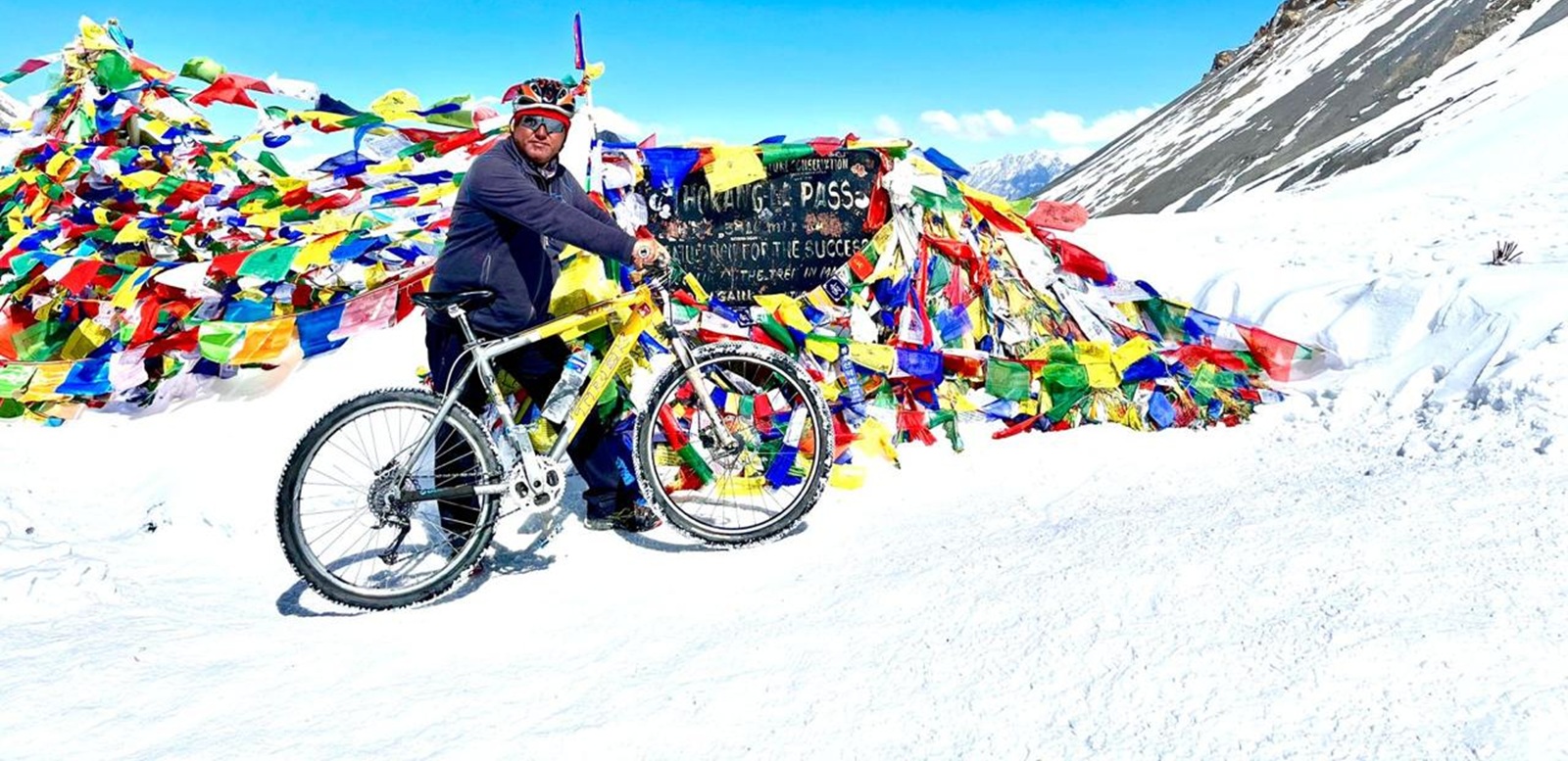
Leaving Thorong Phedi, we trek to Thorong High Camp and further to Thorong Pass (5416m). Thorong La Pass connects Manang village in the east with Muktinath temple and Ranipauwa village to the west. Now we begin our downward hike for Muktinath, a sacred pilgrimage site for Hindus and Buddhists.
From Muktinath, we drive to Tatopani -famous for its hot springs. People believe that the hot spring water at Tatopani cures skin diseases. If you like, you can take a dip in this hot water. We will be spending the night at Tatopani before beginning another adventure for Poon Hill.
After breakfast at our guest house, we begin our hike passing the lustrous lands filled with rhododendron, birch, and magnolia forests, to Ghorepani. We spend a night at Ghorepani, the last settlement before Poon Hill. The next morning, we will wake up at around 4 am and begin our upward hike for Poon Hill. It is an hour’s walk to reach Poon Hill.
Poon Hill (3210m) is a famous vantage point for spectacular sunrise and views of Dhaulagiri, Annapurna (I, II, III, South), Hiuchuli, Nilgiri, Macchapuchre, Tukuche Peak, Dhampus Peak, Gurja Himal several other mountain peaks, lush hills, magnificent waterfalls and many more. Capturing each moment in our cameras, we hike back to Ghorepani and begin our downward hike to Tadapani for an overnight stay.
The next day, we trek to Ghandruk, a popular Gurung settlement with beautiful views. On our last day’s trek, we hike down to Nayapul and then drive to Pokhara. We spend overnight in Pokhara. The next day, we drive back to Kathmandu and complete our entire adventure.
Day 1: Kathmandu Arrival [1,338 m/4,390 ft]
Day 2: Kathmandu Sightseeing and Trek Preparation
Day 3: Drive Kathmandu [1,338 m/4,390 ft] to Dharapani [1,860m / 6,200ft]
Day 4: Trek from Dharapani (1,860m / 6,200ft) to Chame (2,610m /8,890ft)
Day 5: Trek from Chame (2,610m / 8,890ft) to Upper Pisang (3,300m / 10,826ft)
Day 6: Trek from Pisang (3,115m / 10,200ft) to Manang (3,540m / 11,300ft)
Day 7: Rest and Acclimatization day at Manang (3,519m / 11,545ft)
Day 8: Trek from Manang (3,540m / 11,300ft) to Yak Kharka (4,050m / 14,275ft)
Day 9: Trek from Yak Kharka (4,050m/ 14,275ft) to Thorong Phedi (4,525m / 14,525ft)
Day 10: Trek from Thorong Phedi (4,525m / 14,525ft) to Muktinath Temple (3,760m / 12,623ft) via Thorong La High Pass (5,416m / 17,756ft)
Day 11: Drive from Muktinath (3,760m / 12,623ft) to Jomsom and Tatopani (1,200m / 3,940ft)
Day 12: Trek from Tatopani (1,200m / 3,940ft) to Ghorepani (2,860m / 9,385ft)
Day 13: Early morning hike to Poon Hill (3,210m / 10,525ft) and trek to Tadapani (2,630m /8,630ft)
Day 14: Trek Tadapani (2,630m /8,630ft) to Ghandruk (1940m/6360ft)
Day 15: Trek Ghandruk (1940m/6360ft) to Nayapul (1,070m/3,510 ft) and drive to Pokhara (820m/2,690ft)
Day 16: Drive Pokhara (820m/2,690ft) to Kathmandu (1,338 m/4,390 ft)
Day 17: Final Departure – Airport Drop
As we step off the plane at Tribhuvan International Airport, the warm Nepali air greets us with the scent of incense and the flutter of colorful prayer flags. Our Outward Adventure guide welcomes us with traditional marigold garlands and a friendly "Namaste" before whisking us through Kathmandu's lively streets to our comfortable hotel. After freshening up, we gather on the rooftop terrace where the sunset paints the surrounding hills gold, sipping masala tea while our lead guide outlines the incredible journey ahead.
The energy of Thamel's bustling streets beckons us for an evening stroll past trekking shops and cozy cafes. We sample our first plate of steaming momos at a local eatery, the flavors exploding with Himalayan spices. Back at the hotel, we organize our gear by lamplight, the excitement making it hard to sleep despite our travel fatigue. Tomorrow's cultural exploration promises to immerse us deeper into Nepal's rich heritage before we hit the trail.
We wake to the sound of temple bells and crowing roosters, ready for our day of cultural discovery. At Swayambhunath Stupa, we climb the 365 steps alongside Buddhist pilgrims and playful monkeys, the panoramic view revealing Kathmandu waking below. The ancient Newari architecture of Patan Durbar Square leaves us marveling at intricate woodcarvings that have stood for centuries, their details still vibrant with history.
After lunch, we transform into gear inspectors, spreading equipment across the hotel courtyard like a mountaineering bazaar. Our guides demonstrate proper layering techniques while a local amchi (healer) teaches us to identify altitude-relief herbs we'll encounter. As dusk falls, we savor a farewell feast of yak steak and thukpa in a converted Rana-era palace, the carved wood ceilings whispering stories of Nepal's royal past. The blend of culture and preparation leaves us perfectly poised to begin our Himalayan adventure tomorrow.
The winding Prithvi Highway tests our stomachs with endless switchbacks but rewards us with waterfall views and cliffside tea stalls. We switch to rugged 4WD vehicles at Ngadi, crossing the Marsyangdi on a swaying suspension bridge where local children giggle at our cautious steps. The valley walls close in as we enter Manang District, passing terraced fields of buckwheat glowing golden in the afternoon light.
Dharapani welcomes us with its iconic white chorten gate, marking the traditional start of our trek. Our teahouse balcony overlooks apple orchards where farmers harvest the season's last fruit. As we organize gear, local kids challenge us to carrom board games, their laughter mixing with the distant roar of the glacier-fed river. The mountain air carries the smoky scent of burning juniper - tonight's blessing for our journey ahead.
Morning frost crunches underfoot as we begin our first true trekking day through ancient pine forests where sunlight filters through needles like stained glass. At Timang village, we pause at a viewpoint where Annapurna II suddenly reveals itself - its icy summit floating above the morning mist like a dream. The crisp mountain air fills our lungs as we settle into the rhythmic pace of trekking.
The afternoon brings the dramatic Marsyangdi Gorge, where the river has carved smooth marble walls over millennia. We spot our first mani walls - stone tablets carved with Tibetan mantras, their surfaces worn shiny by generations of passing hands. Chame surprises us with its bustling bazaar and natural hot springs. Soaking in the sulfur pools under stars, we watch our breath fog in the crisp air while muscles unknot from the day's climb.
Today's trail alternates between fragrant pine forests and exposed scree slopes where mountain goats watch our progress. At Brathang, we detour to a cliffside nunnery where Buddhist nuns chant amidst swirling butter lamp smoke. The landscape transforms dramatically after lunch - juniper gives way to wind-sculpted dwarf shrubs as we enter the Himalayan rain shadow.
Upper Pisang clings to the mountainside like a medieval fortress, its stone houses stacked haphazardly against the cliffs. As evening falls, we join villagers in the communal mill house, grinding roasted barley into tsampa flour while elders share tales of yeti encounters. The night sky here is staggering - with no light pollution, the Milky Way stretches from horizon to horizon, so bright it casts faint shadows.
We choose the high route through Ghyaru village, where every switchback reveals more breathtaking Annapurna vistas. The trail winds past ancient chortens adorned with yak horns, their colors faded by decades of harsh weather. At Ngawal's medieval monastery, a resident lama demonstrates sand mandala creation, the intricate patterns destroyed upon completion as a lesson in impermanence.
Manang feels like a bustling metropolis after days in remote valleys. We visit the altitude research clinic where doctors demonstrate how our bodies adapt to thinning air. The afternoon finds us sampling yak cheese pizza at a cozy bakery, its windows framing Gangapurna's glacier like living art. As the sun sets, we watch locals play khuru (traditional dart game) in the pasture, their laughter echoing off the surrounding peaks.
Morning light gilds the Gangapurna Icefall as we set out on our acclimatization hike to the glacial lake. The trail climbs steadily past prayer flags snapping in the wind, each step helping our bodies adjust to the altitude. At the lake's edge, we press our hands against million-year-old ice, listening to the glacier's deep groans as it shifts imperceptibly.
Back in Manang, we explore the village's narrow alleyways, stopping to watch a traditional Tibetan opera rehearsal. In the afternoon, we attend a fascinating lecture on altitude sickness at the Himalayan Rescue Association clinic. As dusk falls, we join locals at the cinema house - a cozy loft where we watch "Himalaya" (1999), the landscapes outside eerily matching those on screen.
The morning trail climbs through juniper-scented slopes where blue sheep blend perfectly with the scree. We cross ancient mani walls carved with "Om Mani Padme Hum," spinning each prayer wheel as we pass. At Gunsang, seasonal yak herders invite us for salty butter tea in their stone hut, the smoky interior warm against the growing mountain chill.
Yak Kharka lives up to its name - dozens of shaggy yaks graze beside stone corrals, their bells creating a melodic backdrop. We help our crew collect dried dung for fuel, learning how this "brown gold" keeps teahouses warm. That evening, bundled in yak wool blankets, we listen to herders' stories of migoi (the Himalayan yeti) while wind moans through the pass above.
The morning's steep climb to Ledar (4,200m) has us practicing the "Manangi Rest Step" - a slow, energy-saving technique perfected by salt traders. The air grows noticeably thinner as we ascend, each breath requiring conscious effort. At Churi Ledar, we spot our first snow partridges, their white plumage camouflaging them against patches of late-season snow.
Thorong Phedi's cluster of lodges clings dramatically below the pass's headwall. After lunch, we scout the initial switchbacks, practicing pressure breathing for tomorrow's big climb. The lodge's German baker surprises us with apfelstrudel - the world's highest-altitude pastry - perfect fuel for our 3AM start. As night falls, we organize summit packs by headlamp, the anticipation making sleep elusive.
Frost crystals glitter on our boots as we begin the ascent by headlamp, our breath forming clouds in the freezing air. The "Crampon Hill" section lives up to its name - ice requiring careful footing even in pre-dawn darkness. At High Camp (4,850m), dawn reveals the pass's true scale: endless switchbacks cutting through snowfields to the prayer-flag-draped summit.
Standing atop Thorong La fills us with euphoria - we're at the highest point of our journey! The descent into Mustang is equally dramatic, sliding down snow slopes on our backsides like giddy children. Muktinath's 108 sacred waterspouts provide a purifying (if icy) bath for sore muscles, followed by well-earned celebrations at our lodge.
The morning jeep ride through Kali Gandaki Gorge treats us to ever-changing landscapes - from arid cliffs to lush valleys. In Jomsom, we explore the medieval fortress at Jharkot before continuing our descent. The road winds past apple orchards and through traditional Thakali villages where we sample local honey.
Arriving in Tatopani, we immediately head for the natural hot springs by the river. Soaking in the mineral-rich waters as the sun sets, we watch langur monkeys play in the trees above. The tropical warmth here feels shocking after days in the high mountains, and we sleep deeply to the sound of the rushing river.
Morning mist rises from the valley as we begin our climb through terraced fields and rhododendron forests. The trail winds through Magar villages where children run out to greet us with cheerful "Namastes." At Shikha, we stop for lunch on a sunny terrace, the first views of Dhaulagiri's snows peeking through the clouds.
The afternoon ascent grows steeper through old-growth forests alive with birdsong. Reaching Ghorepani as the sun sets, we're rewarded with our first panoramic view of the Annapurna range. The cozy lodge warms us with wood-fired stoves and endless cups of ginger tea as we prepare for tomorrow's pre-dawn hike to Poon Hill.
Our 4:30AM start is rewarded tenfold as we reach Poon Hill's viewpoint. Dawn breaks over the Himalayas in a spectacular display - the entire Annapurna range glowing gold, with Dhaulagiri's massive bulk dominating the western skyline. We take countless photos but know none can capture this magic.
Descending to Ghorepani for breakfast, we then trek through enchanting rhododendron forests to Tadapani. The trail offers constantly changing views of Machhapuchhre (Fishtail Mountain) as we traverse ridges and pass through small settlements. Arriving by early afternoon, we relax on the lodge porch with uninterrupted mountain views, already nostalgic for the high peaks we've left behind.
Morning mist swirls through the valley as we descend through lush forests alive with birdsong. The trail winds past waterfalls and through traditional Gurung villages where women weave on outdoor looms. At Ghandruk, we're welcomed into a local home for tea, learning about the proud Gurung culture and their history as Gurkha soldiers.
The afternoon offers time to explore this beautifully preserved village with its stone houses and slate roofs. We visit the small museum documenting Gurkha military history before enjoying a cultural show in the evening. The rhythmic dancing and haunting sarangi music create a perfect farewell to mountain life as we prepare to return to civilization tomorrow.
Our final morning on the trail descends through terraced fields where farmers wave as we pass. At Birethanti, we complete our trekking permits before continuing to Nayapul. The transition from rural trails to paved road feels sudden - a reminder of how far we've come both geographically and personally.
The drive to Pokhara winds along the Seti River, with glimpses of Fishtail Mountain between the hills. Arriving at our lakeside hotel feels luxurious after weeks in teahouses - hot showers, proper beds, and the incredible sight of the Annapurna range reflected in Phewa Lake at sunset. We celebrate with proper espresso and well-earned pizzas, already reminiscing about our shared adventures.
The scenic drive back to Kathmandu follows the Trisuli River, where we spot rafters navigating the rapids. We stop for lunch at a riverside restaurant, enjoying one last plate of dal bhat while watching the powerful currents. The landscape gradually changes from lush hills to urban sprawl as we approach the capital.
Back in Kathmandu, we check into our hotel with time for last-minute shopping in Thamel. Our farewell dinner features cultural performances and a slideshow of our journey that has us laughing at frozen beards and gasping anew at summit views. The blend of exhaustion and accomplishment makes for a bittersweet final evening together.
Morning finds us packing carefully - dirty gear separated from clean, souvenirs wrapped in spare socks. Some of us visit nearby temples for final blessings while others enjoy a leisurely breakfast recalling trip highlights. At the airport, we exchange heartfelt goodbyes with our guide team, promising to share photos and stay in touch.
As the plane lifts off, we press foreheads to windows for a final glimpse of the Himalayas between clouds. Somewhere over the Gangetic Plain, it hits us: we didn't just visit the mountains; we let them visit us. Their lessons - patience from altitude's forced slowdown, resilience from pushing beyond perceived limits - will surface unexpectedly in our daily lives back home. And though our boots may dry, part of us will forever walk those high trails where prayer flags snap in the wind and yaks' bells chime like temple gongs. Until next time, Himal.
Transportation
Food and Accommodation
Staff
Permits and Tariffs
Additional