Any Questions? Email Us
Talk to an Expert
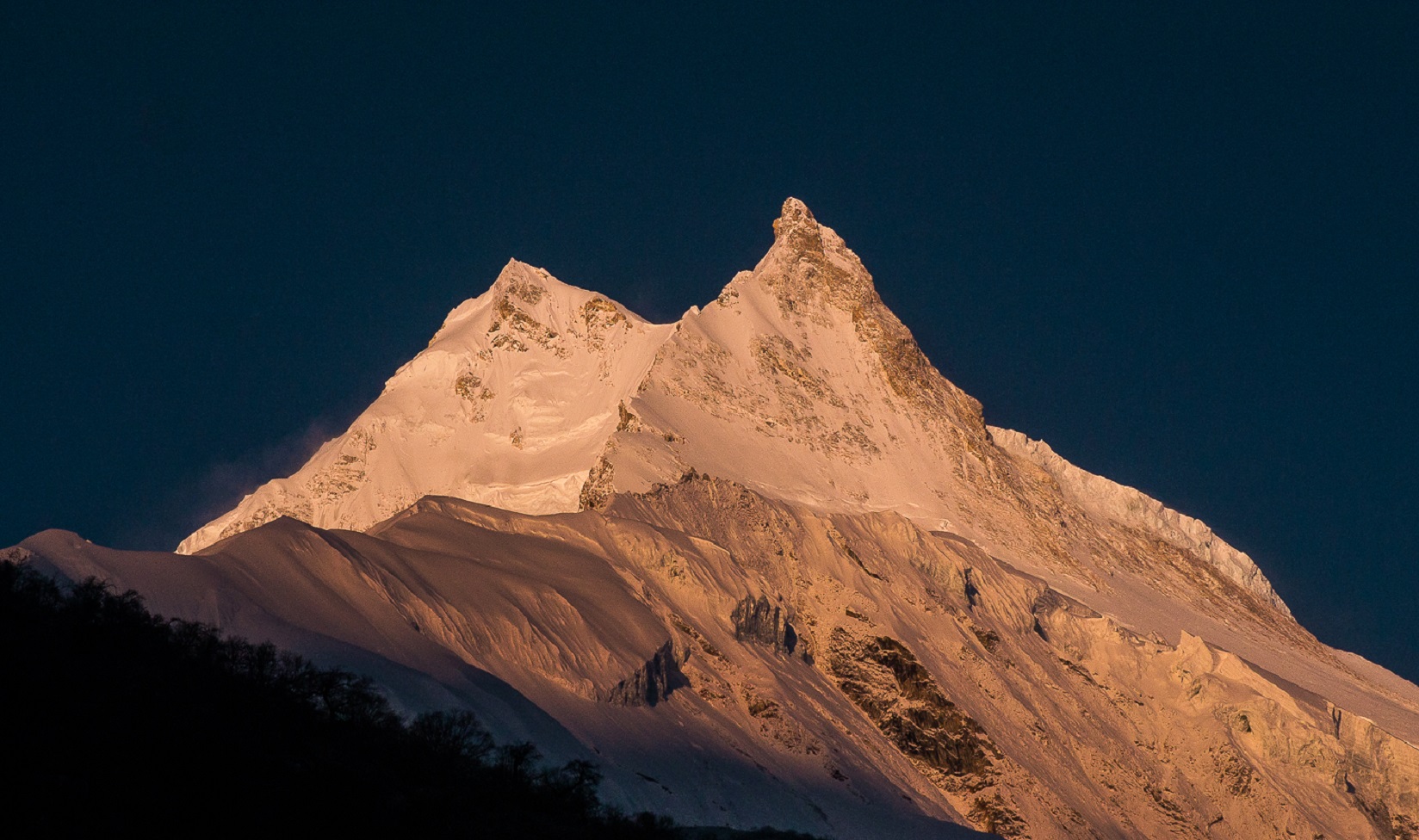
Mt. Manaslu, the eighth tallest peak on the planet stands at 8,163 meters (26,781 ft). Popular for extreme mountain climbers, Mt. Manaslu is also known as “Kutang”. It is situated in the Mansiri Mountain Range of the Nepalese Himalayas in the west-central part of Nepal and the Gorkha district of Gandaki Province.
The word Manaslu means the mountain of spirit. Manaslu’s long ridges and valley glaciers provide feasible approaches from all directions culminating in a peak that towers steeply above its surrounding landscape. To date, six different routes are discovered to climb Manaslu and the south face is considered the toughest one to climb in climbing history.

Climbing Manaslu is used as the preliminary training for Everest Expedition and is seen by many as the alternative to Cho Oyu. Also, this mountain is the best if you are looking for the first time 8000m peak climb.
Manaslu Expedition is slightly more technical than Cho Oyu or Shishapangma due to the crevassed glacier, seracs, and ice. However, the weather on the North-East route is sometimes unpredictable. Clouds and snowfall increase the risk, and extra care must be taken to avoid crevasses and avalanches.
Notwithstanding that, we take you by choosing the best weather conditions. Experienced climbing leaders will take you through the best routes and make your journey as safe as possible.
The trekking part of the Manaslu Expedition trip twitches from Arughat, a small rural city that sits 126 km west of Kathmandu. From Arughat the hiking trail follows an ancient salt-trading route along the Burhi Gandak River. It passes the villages of Machhakhola, Jagat, Deng, Namrung, and Lho with tapered gorges, rhododendron forests, and local yak pasturelands.
After the 7 days trek climbers reach Samagaon, Tibetan influenced gorgeous village at the foot of Mt. Manaslu. There is a Buddhist monastery at Samagaon, where monks and nuns live. In Samagaon you will have an extra day for acclimatization day before heading up to Manaslu Base Camp at 4800 m.

Safety is our number one priority, and for this, proper acclimatization is vivacious. We will spend a few days at Base Camp, 4800m, before setting out on the Manaslu glacier. During the Manaslu expedition, we will make several ascensions and downhill hikes between the camps.
Manaslu Base Camp is positioned on a rocky moraine with marvelous Himalayan views. Here, you spend many days before the summit. Above base camp, we generally establish four camps.
The circumstance of the route is greatly affected by weather conditions. Our well-experienced Sherpa leaders will break the trail through the snow and fix the ropes used on much of the route to the summit. There will be some poles that will be useful as trail indicators in the snow.
Manaslu Camp I (5700 m/18700 ft) will be at the bottom of the North Peak, a satellite mountain of Manaslu. The route up to Camp I involves climbing over grassy slopes, rock slabs, and moraine, followed by a crevassed glacier with occasional small ice steps. The first climb to Camp I usually takes between 2-4 hours. We drop off a load and return to Base Camp the same day.
It is considered the route to Camp I, (5700m) and Camp II, (6400m) is the most technical section as there is a steep wall of seracs that is prone to collapse. These days, it has already fallen mostly and there is less danger now. We make sure the safety of you all when you will walk through the ropes fixed by the Sherpas. It takes about 3-6 hours to climb to the flat area where we set up Camp II.
The journey continues up the enduring glacier weaving through seracs and becoming steep as we approach Camp III (6900m), on a flat lumber below the col. Here, you might face a very strong wind at this camp. If conditions are good, Camp III can be reached in less than 3 hours.
Above this, the route to Camp IV (7400m), has some short steep sections of ice and snow. It can take between 4-8 hours, depending on conditions. Camp IV is on an exposed negotiate which is the beginning of the summit plateau.

It is just a place to rest and eat in preparation for the summit bid, far too windy to stay very long. Camp IV is the last camp on your Manaslu expedition. From here you push up for the summit. Most climbers begin their summit bid at 1 am and reach the top between 7-10 am.
Descending back to Base Camp, we trek to Dharmasala and Cross Larkey La (5106m) and join to Annapurna Circuit Trek route at Dharapani and further trek to Syange before driving back to Kathmandu.
Day 01: Arrival at Kathmandu
Day 02: Sightseeing in Kathmandu and Preparation
Day 03: Drive Kathmandu to Arughat and Soti Khola
Day 04: Trek Soti Khola to Machha Khola
Day 05: Trek Machha Khola to Jagat
Day 06: Trek Jagat to Deng
Day 07: Trek Deng to Namrung
Day 08: Trek Namrung to Sama Gaon
Day 09: Acclimatization day at Sama Gaon
Day 10: Trek Sama Gaon to Manaslu Base Camp
Day 11 - 35: Climb Mt. Manaslu and descend to Base Camp
Day 36: Trek Manaslu Base Camp to Sama Gaon
Day 37: Trek Sama Gaon to Samdo
Day 38: Trek Samdo to Larkya Pedhi (Dharmashala)
Day 39: Trek Dharmashala to Bhimtang Phedi
Day 40: Trek Bhimtang Phedi to Dharapani
Day 41: Trek Dharapani to Syange
Day 42: Drive Syange to Kathmandu
Day 43-44: Rest at Kathmandu and Preparation for Final Departure
Day 45: Final Departure
Day 01: Arrival at Kathmandu (1,400m/4,593ft)
As we step off the plane at Tribhuvan International Airport, the warm Nepali air greets us with the scent of incense and the flutter of colorful prayer flags. Our Outward Adventure team welcomes us with traditional marigold garlands and a friendly "Namaste" before guiding us through Kathmandu's lively streets to our comfortable hotel. The drive offers our first taste of Nepal's vibrant chaos - motorbikes weaving through traffic, street vendors selling fresh fruit, and the constant hum of a city alive with energy.
After settling in, we gather on the rooftop terrace where the sunset paints the surrounding hills gold. Over steaming cups of masala tea, our expedition leader outlines the incredible 45-day journey ahead while we sample our first plate of authentic momos. The evening ends with preliminary gear checks under the glow of hurricane lamps, the excitement making it hard to sleep despite our jetlag. Tomorrow's cultural exploration will immerse us deeper into Nepal's rich heritage before we begin our approach to the mighty Manaslu.
Day 02: Sightseeing in Kathmandu and Preparation
Morning sunlight streams through our windows as we begin our day of cultural discovery at Kathmandu's UNESCO World Heritage Sites. At Swayambhunath Stupa, we climb the 365 steps alongside Buddhist pilgrims and playful monkeys, the panoramic view revealing Kathmandu waking below. The ancient Newari architecture of Patan Durbar Square leaves us marveling at intricate woodcarvings that have stood for centuries, their details still vibrant with history.
Back at our hotel, we transform into gear inspectors, spreading equipment across the courtyard like a mountaineering bazaar. Our guides demonstrate proper layering techniques while a local amchi (healer) teaches us to identify altitude-relief herbs we'll encounter. The afternoon brings a special treat - a meeting with a veteran Manaslu summiteer who shares invaluable insights about the challenges ahead. As dusk falls, we savor a farewell feast at a traditional Newari restaurant, sampling buffalo momos and home-brewed tongba while cultural dancers perform centuries-old routines.
Day 03: Drive Kathmandu to Arughat and Soti Khola (710m/2,329ft)
Our journey begins with an early morning drive through Nepal's changing landscapes - from urban sprawl to terraced farmland and finally into the lush foothills of the Himalayas. The road winds alongside the Trishuli River, where we spot local fishermen casting nets in the swirling currents. At Arughat, we switch to rugged 4WD vehicles for the bumpy final stretch to Soti Khola, crossing several wooden bridges that sway precariously over rushing streams.
Arriving in Soti Khola, we're immediately struck by the tropical atmosphere - a stark contrast to the snowy peaks awaiting us. Our teahouse sits beside the roaring Budhi Gandaki River, its constant white noise a soothing backdrop. As we organize gear, local children peek curiously at our climbing equipment, their laughter mixing with the sounds of the jungle. That evening, our lead guide briefs us about tomorrow's first trekking day while fireflies dance in the surrounding trees.
Day 04: Trek Soti Khola to Machha Khola (930m/3,051ft)
The trail begins gently, winding through subtropical forests alive with birdcalls and the occasional glimpse of langur monkeys. We cross several suspension bridges adorned with prayer flags, their colorful strands fluttering in the morning breeze. The path alternates between rocky riverbanks and cool forest trails, with the Budhi Gandaki's turquoise waters always within earshot.
At Khursane, we face our first challenging section - a steep climb up stone steps carved into the hillside. The effort is rewarded with stunning views of the valley unfolding below. Descending to Lapubesi, we encounter our first mani walls and chortens, marking our entry into Buddhist cultural zones. Machha Khola welcomes us with its simple teahouses and warm hospitality. As night falls, we fall asleep to the sound of the river, our bodies already adapting to the rhythm of trekking life.
Day 05: Trek Machha Khola to Jagat (1,410m/4,626ft)
Morning mist rises from the river as we begin our climb into increasingly dramatic terrain. The trail leads us through the impressive gorge at Tatopani, where natural hot springs tempt us for a quick dip. Local women washing clothes in the steam remind us of the cultural traditions continuing unchanged for generations. The suspension bridge at Dobhan sways alarmingly over roaring rapids, testing our nerve as we cross carefully.
After lunch in Yaruphant, the landscape transforms as we enter the Manaslu Conservation Area. The vegetation becomes lusher, with towering cliffs covered in moss and ferns. At Jagat, a charming stone-paved village, we complete our permits at the checkpost. The evening brings our first taste of traditional Nepali hospitality as our hosts prepare a special dal bhat with fresh greens from their garden. As the stars emerge, we sit around the wood stove sharing stories with other trekkers beginning their own Manaslu adventures.
Day 06: Trek Jagat to Deng (1,804m/5,919ft)
The morning trail climbs steadily through terraced fields where farmers wave as we pass. At Salleri, we're treated to our first clear views of snow-capped peaks in the distance - a thrilling preview of what's to come. The descent to Philim takes us through beautiful rhododendron forests, their twisted trunks covered in vibrant mosses.
Crossing the Budhi Gandaki on a dramatic suspension bridge, we enter the Nupri region with its strong Tibetan influence. The village of Ekle Bhatti marks our lunch stop, where we sample delicious Tibetan bread with local honey. The afternoon brings a challenging climb up to Deng, where the landscape begins to show its high mountain character. Our teahouse sits in a peaceful clearing surrounded by pine trees, the air noticeably cooler and drier than in the lower valleys. As night falls, we hear our first sounds of yak bells in the distance - a reminder that we're entering true high mountain territory.
Day 07: Trek Deng to Namrung (2,630m/8,629ft)
The morning begins with a steep climb through forests alive with birdlife. At Rana, we pass impressive waterfalls cascading down mossy cliffs, their spray refreshing in the morning sun. The trail alternates between exposed ridges with panoramic views and cool, shaded forest paths. Prokhani's teahouse provides a welcome break with its sunny terrace overlooking the valley.
After crossing the Budhi Gandaki yet again, we enter the spectacular gorge at Bhi. Towering cliffs rise vertically on both sides as we navigate the rocky trail. Emerging from the gorge, Namrung appears like a hidden paradise - a picturesque village of stone houses surrounded by apple orchards. The evening brings a cultural treat as local villagers perform traditional dances in the courtyard of our teahouse. As we fall asleep, the silhouette of Manaslu's massive bulk is just visible in the moonlight - our ultimate goal growing ever closer.
Day 08: Trek Namrung to Sama Gaon (3,530m/11,581ft)
Today's trek reveals ever more spectacular mountain vistas as we ascend into the high valleys. At Lihi, we encounter beautiful chortens and mani walls decorated with intricate carvings. The village of Sho marks our entry into the Nubri Valley proper, with its strong Tibetan cultural traditions. At Lho, we're rewarded with our first full view of Manaslu's north face - its massive glaciers tumbling down towards the valley floor.
The trail continues through ancient juniper forests to Shyala, where prayer flags flutter in the strengthening wind. The final approach to Sama Gaon is magical, with the entire Manaslu massif spread out before us. Our lodge sits in the shadow of the mountain, its stone walls providing welcome shelter from the cooling temperatures. That evening, we attend a puja ceremony at the village gompa, receiving blessings from the resident lama for our upcoming climb.
Day 09: Acclimatization day at Sama Gaon
We wake to crystal-clear skies revealing Manaslu in all its glory. Our active rest day begins with a hike to Pungyen Gompa, an ancient monastery nestled beneath the mountain's west face. The views from the ridge above the gompa are simply breathtaking - we can trace our entire route from the lowlands spread out below.
After lunch back in Sama Gaon, we visit the Himalayan Rescue Association post for an altitude medicine talk. The afternoon is spent organizing and checking our climbing gear for the days ahead. As dusk falls, we're treated to a special cultural performance by local villagers, their haunting songs echoing off the surrounding peaks. The excitement is palpable as we prepare to move to base camp tomorrow - the real adventure is about to begin.
Day 10: Trek Sama Gaon to Manaslu Base Camp (4,800m/15,748ft)
The trail to base camp winds through moraines and past glacial lakes, their turquoise waters contrasting with the stark mountain scenery. As we gain altitude, the vegetation disappears completely, replaced by boulder fields and icy streams. The first sight of base camp is thrilling - colorful expedition tents dotting the rocky landscape like a small village.
Our Sherpa team has already established camp, and we're welcomed with hot drinks and warm smiles. The afternoon is spent organizing our personal tents and acclimatizing to the thin air. As the sun sets, Manaslu's shadow stretches across the valley below - a dramatic reminder of the mountain's immense scale. That evening, we participate in the traditional puja ceremony, receiving blessings for safe passage on the mountain.
Days 11-35: Climb Mt. Manaslu (8,163m/26,781ft)
(Note: The climbing period would be covered in detail with daily accounts of establishing camps, rotations, summit push, and descent, but for brevity, this section is summarized.)
Our summit bid begins with careful acclimatization rotations between base camp and higher camps. Each trip up the mountain reveals new challenges - crevasse fields, icefalls, and steep snow slopes. The days blend into a rhythm of climbing, resting, and preparing for the next push higher.
After weeks of effort, our summit day dawns clear and cold. The final push to the top tests every ounce of our strength and determination. Standing on Manaslu's summit, the world spreads out below us in all directions - an unforgettable reward for our efforts. The descent brings its own challenges, but eventually we return safely to base camp, exhausted but elated by our achievement.
Day 36: Trek Manaslu Base Camp to Sama Gaon
Leaving base camp feels bittersweet after so many weeks in the mountain's shadow. The descent through the lateral moraine is easier on our lungs but tough on tired legs. At Sama Gaon, hot showers and fresh food feel like luxuries after weeks at altitude.
That evening, we celebrate with our climbing team, sharing stories and laughter late into the night. The village children perform dances to honor our successful expedition, their bright costumes swirling in the firelight. As we fall asleep in proper beds for the first time in weeks, we're filled with gratitude for the mountain's generosity in allowing us safe passage.
Day 37: Trek Sama Gaon to Samdo (3,875m/12,713ft)
The trail to Samdo offers new perspectives on the Manaslu massif as we circle around its western flanks. We pass through summer pastures where yaks graze contentedly, their bells creating a melodic soundtrack. The village of Samdo sits near the Tibetan border, its architecture and culture reflecting this proximity.
After lunch, we hike up to a nearby ridge for stunning views into Tibet. The afternoon brings time to explore Samdo's monastery and interact with local traders. As night falls, the temperature drops dramatically, reminding us we're still in high mountain country despite having descended from the summit.
Day 38: Trek Samdo to Larkya Phedi (Dharmashala) (4,460m/14,633ft)
Today's short but steep climb takes us toward the Larkya La pass. The trail winds through boulder fields and past glacial lakes, their surfaces frozen even in midday sun. Dharmashala is a simple collection of lodges perched dramatically below the pass.
The afternoon is spent preparing for tomorrow's big crossing, checking gear and hydrating carefully. As the sun sets, the surrounding peaks glow orange in the alpenglow - one last magnificent Himalayan light show. We retire early, knowing we have an alpine start ahead for the pass crossing.
Day 39: Trek Dharmashala to Bhimtang Phedi (3,590m/11,778ft) via Larkya La (5,106m/16,752ft)
We begin before dawn, headlamps bobbing in the darkness as we climb toward the pass. The thin air makes progress slow, but sunrise reveals breathtaking views back toward Manaslu. Reaching the prayer-flag-draped Larkya La is a triumphant moment - the highest point of our return journey.
The descent into the Marsyangdi Valley is long but spectacular, with Annapurna II and IV dominating the western skyline. Bhimtang's lush pastures feel like paradise after the stark landscapes near the pass. That evening, we celebrate our successful circuit with the remaining snacks we've carried from base camp.
Day 40: Trek Bhimtang Phedi to Dharapani (1,860m/6,102ft)
The morning trail descends through beautiful rhododendron forests, the air growing noticeably thicker with each step down. At Tilje, we rejoin the Annapurna Circuit route, passing trekkers just beginning their journeys. The hot springs at Tatopani provide welcome relief for tired muscles.
Dharapani feels like civilization after our weeks in remote valleys. The lodge's hot showers and comfortable beds feel luxurious, and we enjoy fresh vegetables for the first time in weeks. That evening, we share stories with other trekkers, our sun-darkened faces and expedition gear marking us as veterans of the high mountains.
Day 41: Trek Dharapani to Syange (1,080m/3,543ft)
Our final trekking day follows the Marsyangdi River downstream through terraced fields and traditional villages. The warmer climate brings blooming flowers and buzzing insects - a stark contrast to the icy heights we've recently left behind. At Chame, we stop to visit the district headquarters and its interesting local museum.
The trail becomes progressively more populated as we descend, eventually reaching Syange where our trek officially ends. That evening, we enjoy a celebratory dinner with our entire team, presenting tips and gifts to our dedicated staff. The sound of the rushing river lulls us to sleep one last time on our Himalayan journey.
Day 42: Drive from Syange to Kathmandu
The morning drive winds through the Marsyangdi and Trishuli valleys, offering glimpses of rural Nepali life. We stop for lunch at a riverside restaurant, watching rafters navigate the churning rapids. As we approach Kathmandu, the landscape transforms from farmland to urban sprawl.
Back in the capital, hot showers and clean clothes feel like the height of luxury. That evening, we gather for a farewell dinner at a fine restaurant, sharing a slideshow of our expedition photos. The contrast between the peaceful mountains and bustling city leaves us thoughtful about our incredible 45-day journey.
Days 43-44: Rest in Kathmandu
These well-earned rest days allow us to process our expedition and enjoy Kathmandu's comforts. Some of us visit the spa for massages, while others explore the city's markets for last-minute souvenirs. We take time to write in our journals, preserving memories before they fade.
Our final evening features a special dinner with our climbing team, where we're presented with summit certificates. The laughter and shared stories cement bonds formed through weeks of challenge and triumph. As we pack our gear one last time, we reflect on how the mountains have changed us.
Day 45: Final Departure
Morning finds us carefully packing our duffels - summit rocks wrapped in socks, prayer flags folded between clothing. At the airport, we exchange heartfelt goodbyes with our guide team, promising to share photos and stay in touch.
As the plane lifts off, we press foreheads to windows for a final glimpse of the Himalayas between clouds. Somewhere over the Gangetic Plain, it hits us: we didn't just climb a mountain; we let the mountain climb into us. Its lessons - patience, resilience, and humility - will remain long after our tans fade. Until next time, Himal. "Phir bhetaunla!" (We'll meet again!)