
Any Questions? Email Us
Talk to an Expert
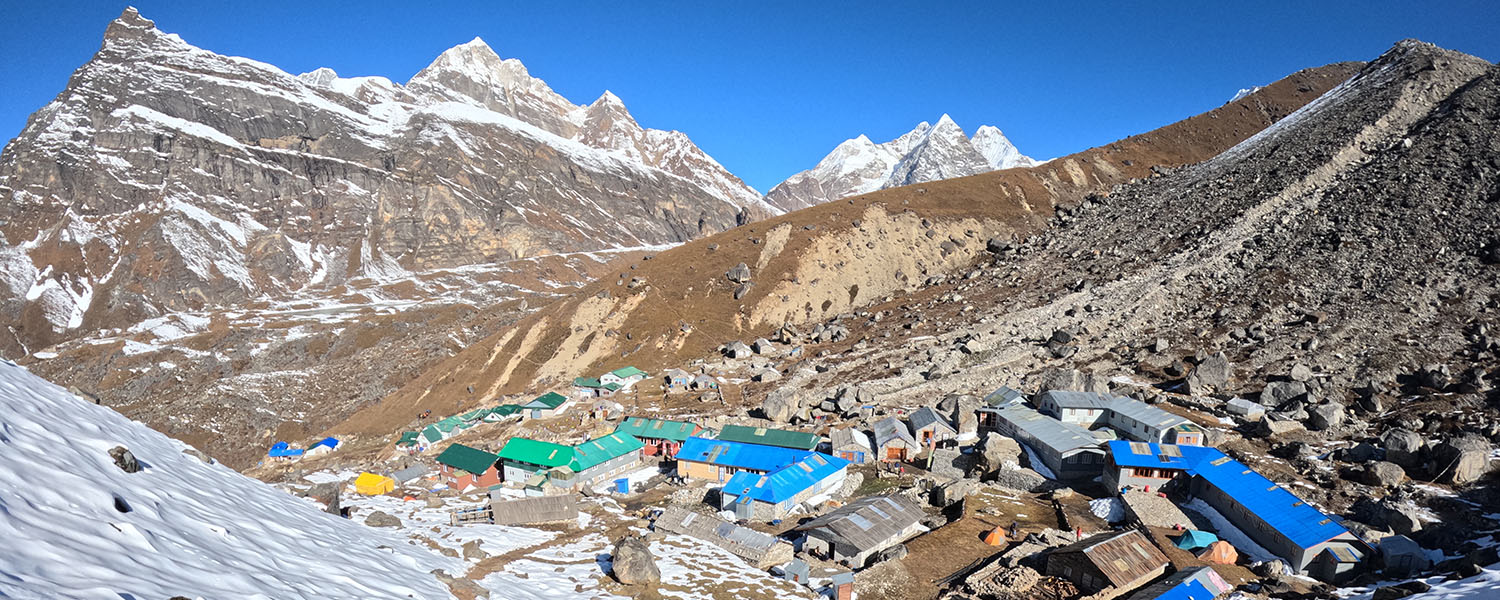
Mera Peak, 6,476 m/21,247 ft, is the tallest trekking peak in the Nepalese Himalayan ranges. It lies in the Mahalangur segment, Barun sub-section of the Himalaya, and is administratively in Nepal's Sagarmatha Zone, Sankhuwasabha, Nepal. It is the easiest, non-technical peak, and it attracts thousands of tourists from all around the planet.
Climbing it in April provides an enthralling adventure to the climbers amidst auspicious weather surroundings and spectacular Himalayan outlooks. As April marks the beginning of the expedition to the high mountain peaks, it also offers acclimatizing hikes or practice climbing before conquering high Himalayan giants like Mount Everest, Lhotse, Kanchenjunga, and many others.
While climbing this peak, climbers can witness the magnificent sceneries of Mt. Nuptse (7855m), Mt. Pumori (7161m), Mt. Changaste (7550m), Mt. Amadablam (6856m), Mt. Thamserku (6723m), Mt. Kantega ( 6685m), Mt. Kusum Khagaru (6367m), Mt. Kongde (6011m), Mt. Khumbila ( 5761m), Mt. Twache peak (6367m), Mt. Lingterin (6679m), Mt. Cholaste (6335m), Island peak (6179m), Honku ssouth peak (6119m), Lobuche peak (6145m), Pokalde peak (5806m), Mount Everest (8,848.86m), Lhotse (8,516m), Nuptse (7,855m), Pumori (7,165m), Ama Dablam (6,812m), and Thamserku (6,623m). Other peaks that may be visible depending on your route and viewpoint include Makalu, Cho Oyu, Kangtega, and various other peaks in the Khumbu region. Along with that, while passing through the valley of Hinku valley, you can witness a mixture of adventure, thrill, awesome scenery, trustworthy mountain culture, and spectacular backdrop.
While planning your trip to Mera Peak in April, climbers can hope for stable weather conditions, clear skies, mild temperatures, and lush green mountains full of rhododendron and other flowers. However, as it is a pre-monsoon period, you can expect some thunderstorms or occasional rainfall in the late afternoons. Once you reach Khare and above, the scenery is an uninterrupted one. However, the weather conditions in April certainly contribute to safer and more predictable conditions on the mountain.
April marks the heart of spring in Nepal, bringing some of the best trekking conditions of the year. The days are pleasantly warm, while nights remain cool but not as chilly as in March. Along the trail, temperatures typically range between 0°C and 15°C, making for comfortable hiking with crisp mornings and plenty of sunshine.
As the month progresses, the weather in the Everest region grows even milder. Sunny skies dominate the days, offering breathtaking views of snow-capped peaks against clear blue horizons. The trails are mostly free of snow, allowing for smooth and enjoyable trekking without major obstacles.
Since April is one of the most popular months for climbing Mera Peak, expect plenty of fellow adventurers on the route. Teahouses and lodges can fill up quickly, so it’s wise to book accommodations in advance. You may also end up sharing spaces with other trekkers, adding to the lively atmosphere of the journey.
With stable weather, stunning mountain vistas, and well-defined paths, April is an ideal time to take on Mera Peak. The combination of warm days, radiant sunshine, and awe-inspiring landscapes makes this season a favorite among climbers and trekkers alike.
Below is the itinerary for Mera Peak Climbing in April. However, the itinerary will always be customizable.
Day 1: Kathmandu (1,338m/4,390ft) Arrival
Day 2: Kathmandu Sightseeing and Climbing Preparation
Day 3: Fly Lukla (2,850m/9,350ft) and trek to Chhutang (3,100m /10,170ft) - 4 hours
Day 4: Trek Chhutang to Tulikharka (4,300m/14,107ft) - 8 hours
Day 5: Trek Tulikharka to Kothe (3,580m/11,745ft) - 7 hours
Day 6: Trek Kothe to Tangnang (4,358m/14,297ft) - 6 hours
Day 7: Trek Tangnang to Khare (5,045m / 16,552ft) - 5-6 hour
Day 8: Rest day at Khare – Acclimatization and Ice Climbing Practice
Day 9: Trek Khare to Mera High camp (5,750m/18,865ft) - 5-6 hours
Day 10: Climb Mera High Camp to Summit to Mera Peak (6,476 m / 21,247 ft) and back to Khare – 9-10 hours
Day 11: Contingency Day in Case of Bad Weather
Day 12: Trek Khare to Khote – 6-7 hours
Day 13: Trek Kothe to Zatrabu/Tulikharka - 6-7 hours
Day 14: Trek Thulikharka to Lukla - 8 hours
Day 15: Fly back to Kathmandu
Day 16: Rest Day in Kathmandu
Day 17: Final Departure
Climbing Mera Peak in April is a moderate to challenging adventure, but the spring season offers some of the best conditions for the trek. The trails are generally dry and well-defined, making navigation easier compared to winter months. Each day involves around 3-6 hours of walking, with a mix of steep ascents and descents, though nothing overly technical.
Since April falls in the peak climbing season, the weather is mostly stable, with clear skies and minimal snowfall on the lower trails. However, higher up, you’ll encounter snow, which actually helps with the ascent—firm snow conditions make crampons more effective. That said, you should still be prepared for sudden weather changes, as mountain conditions can shift unexpectedly.
Mera Peak Climbing is suitable for climbers who have no prior mountain climbing experience. With the training and practices provided at Khare or Mera Peak High Camp, they can achieve this. However, proper gears, equipment, and preparations are obligatory.
Along with that, choosing an appropriate company and Climbing Sherpas are also paramount. As Mera Peak does not necessitate widespread technical skills, climbers should have a decent level of bodily fitness and be equipped for the challenges of high-altitude walking.
A guided expedition led by our veteran Sherpa leaders, who have already been to Everest half a dozen times, significantly increases the chances of a successful summit. They will provide you required instruction on mountaineering practices, safety protocols, and show you the proper way to walk on the rope, and teach you what can be done if there are any emergencies.
The novice climbers should be physically, mentally, and emotionally strong, and they should have some cardio exercises, cycling, swimming, or hiking/trekking in the high-elevation trails like Everest Base Camp, Annapurna Circuit definitely helps them conquer the peak to the fullest.
Head
Upper Body
Lower Body
Feet
Sleeping
Personal Climbing Gear
Group Climbing Gears
Rucksack and Travel Bags
Practical Items
Toiletries
Personal Hygiene
 Jul 26, 2026
The Annapurna Circuit Trek is widely recognized as one of the world's greatest trekking adventures, offering an extraord...
Read More Jul 21, 2026
Standing at 6,476 meters (21,247 ft), Mera Peak is Nepal's highest trekking peak and one of the world's most rewarding h...
Read More Jul 14, 2026
Planning a Himalayan adventure in 2027? Everest Base Camp vs Annapurna Base Camp Trek is one of the most searched compar...
Read More Jul 09, 2026
Planning your 2027 Island Peak and Everest Base Camp Trek is your opportunity to experience two of Nepal's most iconic H...
Read More
Leave a Comment